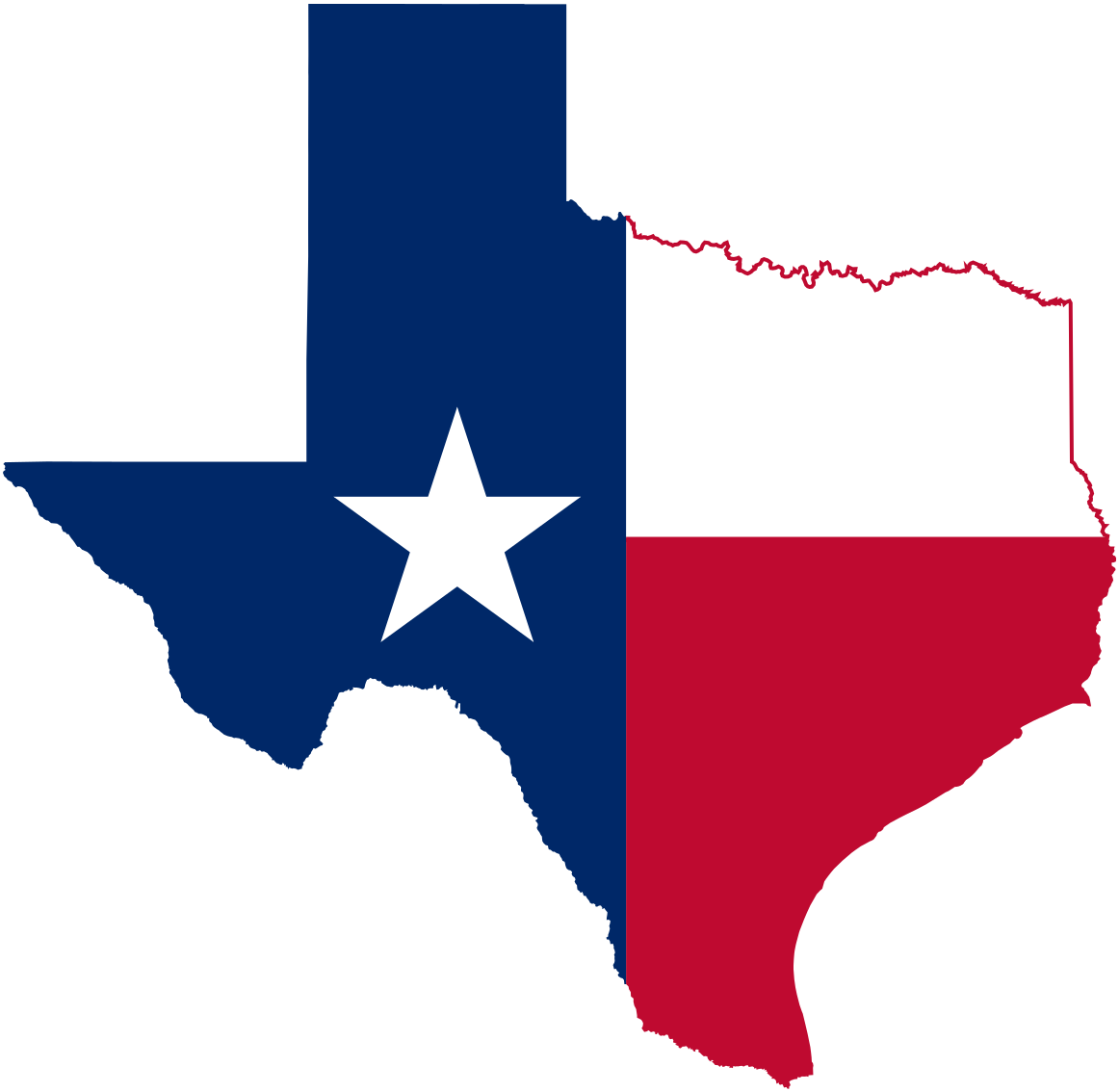
Defining Casinos in Texas: Why the Count Varies
The number of casinos in Texas depends heavily on how one defines a casino within the state's legal and regulatory framework. Most current consumer guides count three tribal casinos as the only operational casinos in Texas. Older or broader lists may include other types of gaming venues or disputed properties, leading to different totals.
Texas law, including Texas Constitution Article III, Section 47, generally restricts lotteries and gambling enterprises unless a specific exception applies. Texas authorizes pari-mutuel wagering at licensed racetracks, but a racetrack is not counted here as a casino merely because it offers race wagering.
Therefore, the practical and widely accepted count of casinos in Texas focuses exclusively on tribal gaming properties that operate under federal and state-recognized frameworks. This distinction is important because it clarifies why venues such as racetracks or bingo halls, which may offer some forms of gambling, are not counted as casinos. For example, racetracks in Texas may offer horse racing but do not provide casino-style gaming such as slot machines or table games. Similarly, bingo halls operate under charitable gaming laws and do not offer the range of games typically associated with casinos. The wider legal picture behind those exclusions is set out in the statewide guide to gambling in Texas.
The Three Recognized Tribal Casinos in Texas
The three tribal casinos commonly acknowledged in Texas are Kickapoo Lucky Eagle Casino in Eagle Pass, Naskila Casino in Livingston, and Speaking Rock Casino in El Paso. Each is owned and operated by a federally recognized tribe and offers Class II gaming, which primarily includes bingo-based electronic gaming machines and certain card games.
Kickapoo Lucky Eagle Casino is operated by the Kickapoo Traditional Tribe of Texas and is located near the U.S.-Mexico border. Naskila Casino is owned by the Alabama-Coushatta Tribe of Texas and situated in East Texas near Livingston. Speaking Rock Casino is managed by the Tigua Tribe of Texas and is located in El Paso.
These casinos operate under the Indian Gaming Regulatory Act (IGRA) and are subject to oversight by the National Indian Gaming Commission (NIGC), which reports on tribal gaming activities nationwide. The IGRA establishes the framework for tribal gaming across the United States, allowing federally recognized tribes to operate gaming facilities on tribal lands with federal oversight, while also requiring certain state agreements depending on the class of gaming.
It is important to note that these tribal casinos do not offer the full range of casino games found in many other states. Their operations are limited to Class II gaming, which excludes slot machines and traditional table games like blackjack or roulette. This limitation reflects both federal and state legal constraints and distinguishes Texas tribal casinos from commercial casinos in other states. A venue-level breakdown of these Texas casino venues covers game mix, location, and visitor rules.
- Kickapoo Lucky Eagle Casino – Eagle Pass, owned by Kickapoo Traditional Tribe
- Naskila Casino – Livingston, owned by Alabama-Coushatta Tribe
- Speaking Rock Casino – El Paso, owned by Tigua Tribe
Why Other Gaming Venues Are Not Included in the Casino Count
Texas has no state-licensed commercial casino market. Licensed racetracks may offer pari-mutuel wagering, but they do not provide a general commercial casino floor and are excluded from this count. Poker clubs and card rooms also should not be counted as casinos merely because they host card play; their business models raise a separate Chapter 47 analysis.
Bingo halls and charitable raffles are authorized under specific voter-approved exceptions but are not considered casinos. These activities are regulated separately and are often limited to nonprofit organizations or charitable causes, distinguishing them from commercial or tribal casino operations.
Sweepstakes and social gaming sites operate under different legal categories and are not regulated as casinos in Texas. These platforms often use virtual currencies or sweepstakes models to comply with state laws but do not offer traditional casino games or payouts. Because they do not fall under the same regulatory framework as tribal casinos, they are excluded from official casino counts.
Offshore online casinos and sportsbooks, while accessible via the internet, are not licensed or authorized by Texas authorities and therefore are excluded from any official casino count. These sites operate outside of Texas jurisdiction and do not have legal recognition within the state. Players should be aware that participation in such sites carries different legal and regulatory considerations.
Casinos located in neighboring states such as Oklahoma and Louisiana are often visited by Texans but do not factor into Texas’ casino count since they are outside state jurisdiction. While these venues may offer a broader range of gaming options, including commercial casinos with slot machines and table games, they are not part of Texas’ regulated gaming environment.
Legal Framework Governing Gambling in Texas
The Texas Constitution Article III, Section 47 generally requires the Legislature to prohibit lotteries and gambling enterprises except for voter-approved exceptions like the state lottery and authorized charitable bingo and raffles. This constitutional provision establishes a restrictive legal environment for gambling activities within Texas.
Texas Penal Code Chapter 47 defines gambling offenses and includes section 47.02, which outlines the core gambling offense and provides a defense for private gambling where no economic benefit is received other than personal winnings and all participants face the same risks. This legal framework limits the scope of permissible gambling activities and criminalizes unauthorized gambling operations.
This legal framework effectively prohibits commercial casinos and limits gambling to specific exceptions, which is why only tribal casinos operate under federal recognition and oversight. Tribal gaming is permitted under the Indian Gaming Regulatory Act, which supersedes certain state laws and allows federally recognized tribes to conduct gaming on tribal lands subject to federal regulation and negotiated compacts with states when applicable.
Understanding this legal context is essential for accurately identifying which gaming venues qualify as casinos in Texas. It also explains why attempts to establish commercial casinos or expand gambling beyond authorized exceptions have faced significant legal and political challenges in the state. The statutes themselves are covered section by section in the Texas gambling statutes.
Class II Gaming and Tribal Sovereignty in Texas Casinos
All three tribal casinos in Texas operate Class II gaming facilities, which primarily include bingo and certain non-banked card games. Class II gaming is distinct from Class III gaming, which includes slot machines and traditional casino table games and is not authorized in Texas tribal casinos. This classification is defined under the Indian Gaming Regulatory Act and determines the types of games that tribes may legally offer.
Class II gaming typically involves electronic bingo machines and games that are based on bingo or similar chance-based formats. These games differ from Class III games, which require negotiated compacts between tribes and states and often include slot machines, blackjack, roulette, and other casino staples.
Tribal sovereignty plays a critical role in the operation of these casinos. Federally recognized tribes have the right to operate gaming facilities on their lands under the Indian Gaming Regulatory Act, subject to federal oversight and certain state agreements. This sovereignty allows tribes to generate revenue for economic development, social programs, and tribal government operations.
The history of tribal gaming in Texas includes legal battles and negotiations to affirm tribal sovereignty and the right to operate these casinos despite state opposition. For example, the Tigua Tribe’s efforts to maintain Speaking Rock Casino involved litigation and federal intervention to uphold tribal gaming rights. These cases highlight the complex interplay between tribal, state, and federal authorities in regulating gaming activities.
Understanding the distinction between Class II and Class III gaming is important for consumers and policymakers alike, as it affects the range of gaming options available and the regulatory environment governing these casinos.
Visitor Requirements Are Property-Specific
Texas does not supply one simple statewide admission rule for every tribal property and every activity. Each venue publishes its own current entry and gaming policy, and those rules can change.
Visitors should check the official property site before travel, especially when a group includes younger adults. Government-issued identification may be required, but accepted documents and access rules are venue questions rather than facts to infer from a directory.
The same source check applies to operating hours, smoking policy, accessibility, lodging, dining, and event access. A reliable guide separates stable legal classifications from operational details that can change without a statute changing.
Property rules also do not decide the broader legal classification. Age or admission signage can confirm who may enter a venue, but it does not establish whether a game is Class II, Class III, charitable, pari-mutuel, or commercial.
Locating Texas Casinos: Geography and Access
The three tribal casinos are geographically dispersed across Texas, providing regional access to gaming within the state. Kickapoo Lucky Eagle Casino is located in the southwest near Eagle Pass, close to the U.S.-Mexico border. Naskila Casino is in the eastern part of the state near Livingston, offering access to residents in East Texas. Speaking Rock Casino is in the far west in El Paso, serving the western region of Texas.
This geographic distribution means that while Texas does not have a dense concentration of casinos, residents in different parts of the state have some access to tribal gaming facilities without needing to travel out of state.
Maps provided by consumer guides and the National Indian Gaming Commission illustrate these locations clearly, helping visitors plan their trips. These maps often include details such as nearby highways, accommodations, and other amenities to assist travelers.
Access to these casinos may vary depending on transportation options and proximity to major urban centers. For example, Speaking Rock Casino in El Paso is near a large metropolitan area, while Kickapoo Lucky Eagle Casino is in a more rural border region. Understanding these geographic factors can help potential visitors plan accordingly.
Counting Casinos in Texas: A Reproducible Method
To count casinos in Texas accurately, one should include only federally recognized tribal gaming properties operating Class II gaming facilities within state boundaries. This approach excludes commercial casinos, racetracks, bingo halls, poker rooms, sweepstakes/social gaming sites, offshore operators, and casinos in neighboring states.
Verification should begin with the Texas State Law Library gambling guide and the National Indian Gaming Commission’s tribal gaming reports to confirm federal recognition and operational status. These sources provide authoritative information on tribal gaming operations and legal status.
Cross-referencing with the Texas Constitution and Penal Code ensures compliance with state legal definitions and restrictions. This step helps clarify which gaming activities are legally permissible and which are not.
Using this reproducible method ensures consistency and accuracy when reporting the number of casinos in Texas. It also helps avoid confusion caused by including venues that do not meet the legal or operational criteria for casinos.
For example, a researcher or consumer guide compiling a list of Texas casinos should exclude venues like racetracks that offer pari-mutuel betting but no casino games, as well as online sweepstakes sites that operate under different legal frameworks. Including only the three tribal casinos aligns with the current legal and regulatory environment.
- Include only federally recognized tribal casinos with Class II gaming
- Exclude commercial casinos, racetracks, bingo halls, poker rooms
- Exclude sweepstakes, social gaming, offshore sites, and out-of-state casinos
- Verify with Texas State Law Library and National Indian Gaming Commission reports
Texas Online Gambling and Sweepstakes Sites: Legal Distinctions
Texas does not have a state-regulated online casino or a statewide mobile sportsbook market as of July 31, 2026. This means there is no official legal framework authorizing online casino gambling or mobile sports betting within the state.
Any online gambling sites accessible to Texans are either unregulated offshore operators or social/sweepstakes gaming platforms, which operate under different legal categories and are not considered casinos. Offshore operators are based outside the United States and do not hold licenses from Texas or U.S. regulatory bodies, raising questions about legality and consumer protections.
Social and sweepstakes gaming sites often use virtual currency or sweepstakes models to comply with state laws that prohibit traditional gambling. These platforms may offer games resembling casino games but do not provide real-money gambling in the traditional sense and are not regulated as casinos.
Consumers should be aware that these sites do not have state authorization and carry different legal and regulatory risks compared to the tribal casinos operating within Texas. Participation in such sites may involve legal uncertainties and lacks the consumer protections found in regulated markets.
It is advisable for consumers to consult official state resources or legal experts for guidance on the status of online gambling and sweepstakes sites in Texas. This distinction between regulated tribal casinos and unregulated online platforms is critical for understanding the gambling landscape in the state.
Primary Sources for Texas Gambling Law
Current-status statements were checked on July 31, 2026. Source labels are provided so readers can verify a later change.
Jordan Reyes
Texas venues and history reporter in San Antonio, Texas. This byline identifies the desk role responsible for sources, updates, and corrections.